Lately, I’ve been thinking a lot about how people actually find brands now, because it’s changed faster than most marketing playbooks have kept up with.
Someone sees a company on Instagram or LinkedIn. Later, they Google them. Then maybe they watch a video, read reviews, or even ask an AI tool what it thinks.
At some point, they decide whether that brand feels credible, relevant, or worth their time.
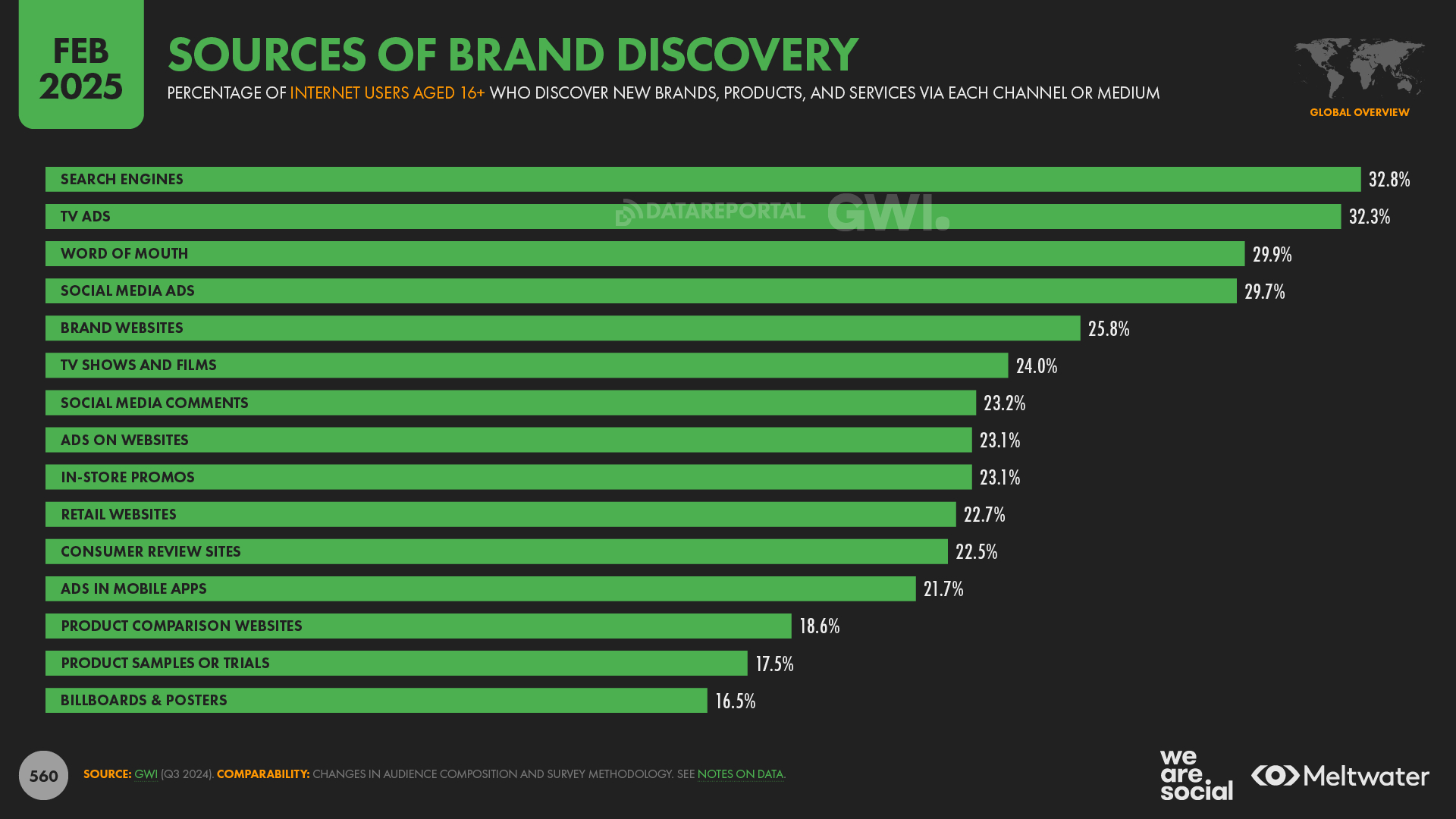
And what’s interesting is that none of those moments live in just one channel anymore. Social media, search results, and AI-generated answers are all shaping discovery at the same time.
Which means SEO, social media, and content strategy aren’t really separate conversations anymore, even if we still talk about them that way. And more importantly, this is something our clients have been asking us about, and we’re incorporating these thoughts into our work right now.
Social Is Often the First Signal
Working in social, you start seeing discovery patterns that analytics don’t always capture.
A post introduces someone to a brand. A video explains something clearly. A founder shares a perspective that sticks. And days or weeks later, that person searches the company because now they’re curious.
Social doesn’t always drive immediate clicks or action. A lot of the time, it drives future searches. People don’t remember the exact post they saw. They just remember the brand name when they need something later.
What This Means for Social Strategy
Social content now has to do more than fill a calendar. It needs to help someone encountering your brand for the first time understand:
- What you actually do
- Who you help
- Why you’re credible
- Why you’re different
Because social increasingly becomes the introduction that leads to search. So when we talk about SEO performance or search demand, it’s worth remembering that social media often creates that demand in the first place.
AI Is Now Part of the Discovery Journey
At the same time, AI tools are changing how people get answers. (Whether we like it or not.)
Instead of clicking through multiple search results, people are increasingly asking large language models like ChatGPT or Gemini to summarize options, compare solutions, or recommend providers. And those systems don’t rely on one website. They pull patterns from across the internet to determine credibility.
What AI systems actually look at and scan:
- Articles and press coverage
- Social profiles and thought leadership
- Videos and interviews
- Reviews and community discussions
- Industry mentions and authority signals
Then they surface brands that consistently show up with credibility. This means that if your brand consistently reinforces the same expertise across platforms, systems gain confidence in associating you with that expertise. If your signals are scattered or minimal, you’re less likely to show up at all.
Which means social presence now influences how machines understand your brand, not just how people do.
What This Looks Like IRL
A real example of this happens to me all the time.
I spend a lot of time on LinkedIn—partly because it’s my job, partly because it’s where a lot of industry conversations happen now, and partly because it’s where I’m building my own professional presence. So I’m scrolling, engaging, seeing what people are talking about, and every so often someone posts something that makes me stop.
Maybe it’s a smart take. Maybe it’s a perspective I haven’t heard before. Maybe it’s just someone clearly explaining something complex in a way that makes sense.
And naturally, I want to know who they are.
So I click their profile. Then I’ll usually Google them or their company. I might skim their website, see if they’ve been interviewed somewhere, check what their company’s social presence looks like, or see what comes up in search results.
Sometimes I’ll jump to YouTube to see if they’ve spoken anywhere or broken down their ideas in more depth. Maybe I’ll give their podcast a listen. And if I like it, I’ll subscribe. And more recently, I might even ask an AI tool what it knows about them or what they’re known for.
None of this feels like formal research. It’s just how we validate credibility now. And what makes someone stand out is consistency.
If their LinkedIn presence, company content, interviews, and brand messaging all reinforce the same expertise, trust builds quickly. You understand who they are and why they matter.
But when things don’t line up—outdated profiles, unclear messaging, inactive social presence, scattered positioning—confidence drops fast. And most brands never realize they lost someone in that moment.
So what does this mean for brands?
It means people are already running this discovery process on your company every day, even if you never see it.
Someone sees your brand mentioned. Someone encounters one of your employees online. Someone hears about you in conversation. And then they start looking.
What they find—or don’t find—shapes whether they trust you enough to move forward. Which is why it’s worth doing a professional inventory of your own online presence.
If someone looked you up today:
- Would they quickly understand what your company does?
- Would your expertise show up consistently across platforms?
- Would your leadership voices reinforce your authority?
- Would your social presence feel active and credible?
Because social media isn’t just where brands post updates anymore. It’s part of how people— and now AI systems—decide whether your brand is worth choosing.
The Real Problem: Content Still Lives in Silos
Here’s where many brands lose momentum: Blogs get published once and disappear. Social posts are created without deeper content. Leadership insights get shared and forgotten. PR wins are celebrated internally, then vanish.
Content exists in isolated moments instead of reinforcing authority over time. Meanwhile, discoverability works through repetition and reinforcement.
What today’s content ecosystem looks like
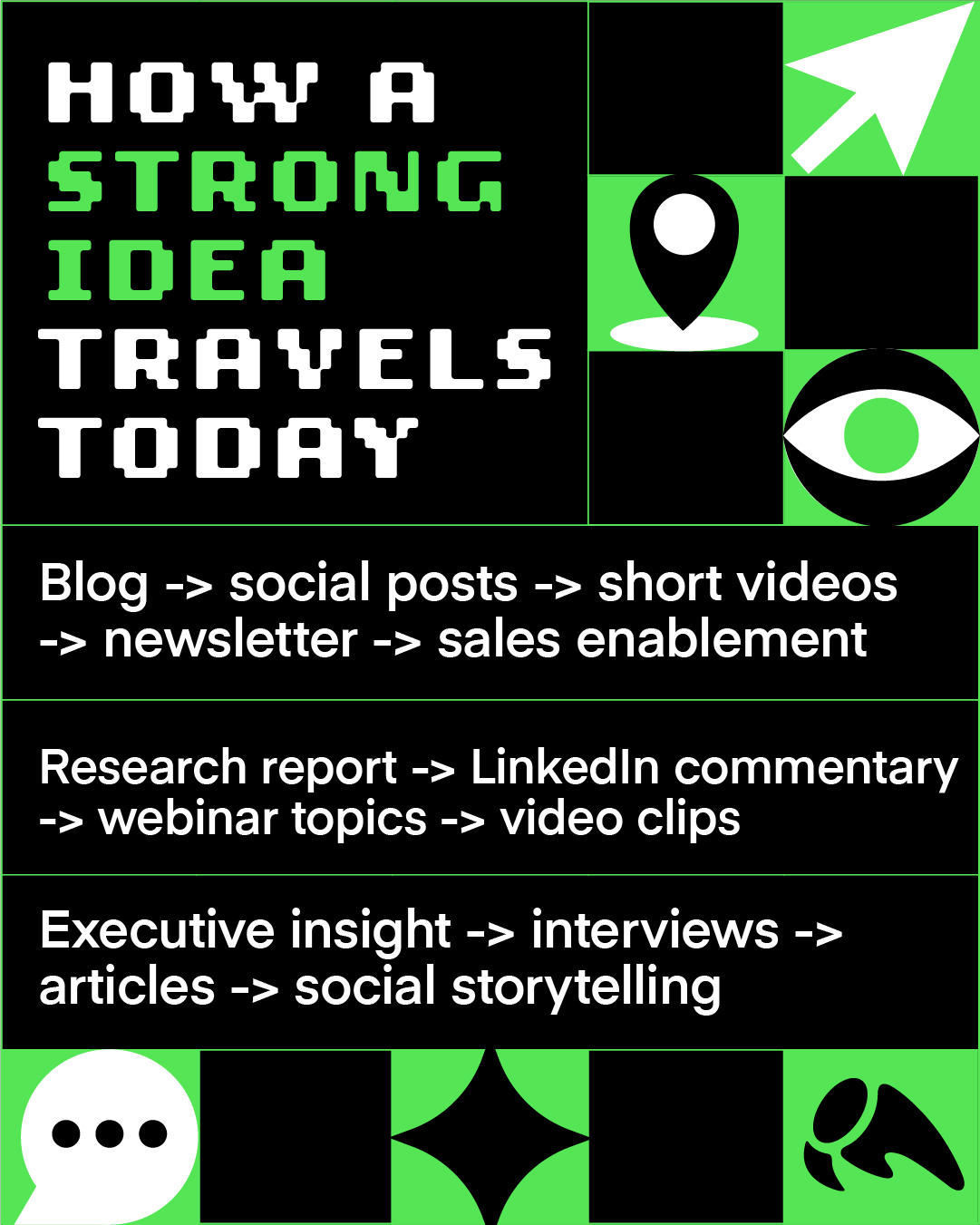
A single strong idea should travel:
- Blog → social posts → short videos → newsletter → sales enablement
- Research report → LinkedIn commentary → webinar topics → video clips
- Executive insight → interviews → articles → social storytelling
How Marketing Teams Can (And Should) Adjust
This shift changes how marketing should operate day to day. Instead of asking, “What are we posting this week?” teams should be asking:
- What questions are our customers asking right now?
- Where are people encountering us first?
- What expertise do we want to be known for?
- Are we reinforcing that everywhere we show up?
Real-world examples
- A healthcare organization publishing cardiac care content should reinforce that expertise socially through physician insights, patient education clips, and preventative care content.
- A B2B company releasing industry research should extend those insights into executive commentary, social storytelling, and searchable educational content.
- A home services brand producing seasonal maintenance content should reinforce it on social media so homeowners remember the brand when issues arise later.
This isn’t just content marketing. It’s ecosystem building.
How do you capitalize on this opportunity?
Most brands haven’t fully adjusted yet. Which means companies that align SEO, social, and content strategy already have an advantage.
Not because algorithms reward them, but because people—and machines—recognize them faster. And in a fragmented attention economy, recognition wins.
Why Overit Approaches Social Media and SEO & GEO Strategy This Way
This is also why, at Overit, we don’t really think in terms of SEO/GEO strategy over here and social media strategy over there. Discovery doesn’t happen in one channel, so strategy shouldn’t either. With the rise in LLMs like ChatGPT, social media has become another important source of brand authority, seen through machine-level co-citations.
Search insights inform what we talk about socially. Social conversations inform what content we build next. Long-form content becomes social storytelling. Authority-building content gets amplified across platforms rather than staying in one place.
The goal isn’t just traffic or engagement. It’s helping brands become easier to find, recognize, and trust wherever audiences are looking.
Because today, discovery happens everywhere at once. And the brands that understand that are the ones people keep finding.
Ready to Rethink AI, SEO, Social Media, and Brand Discoverability?
If your SEO, content, and social strategies still operate independently, it may be time to rethink how your brand shows up across the entire discovery journey. The Crew here at Overit helps brands build connected ecosystems that make them easier to find, understand, and trust. Let’s talk about how your brand shows up today, and how it could show up better tomorrow.